



For years, they decided everything. What you believed. What you did. Even what you thought about yourself.
Now you’re out. And you face the most disorienting question of your life.
Who am I now? What do I believe? What do I do?
If you just exited and you’re reading this, you’ve already taken the hardest step. You left. However, leaving a destructive group is often just the beginning of a longer, more profound journey of self-discovery or self-improvement. Did you make an exit plan? Or were you put on the hot seat, or betrayed? Or did you have a moment of clarity and illumination and just knew you had to get out, even if you risked “burning in hell” or some other horrible fate?
Understanding the Two Yous
Since my near-fatal van crash and deprogramming intervention from the Moonies in 1976, I have had a long journey to process what happened to me, get healing, and go on to become a mental health professional.
I can honestly say it is much easier to exit in 2025 than 50 years ago, when so little was known and understood about destructive cults and how to help. Over almost 5 decades of full-time effort, I have worked with thousands of people recovering from a wide variety of situations involving undue influence, including destructive cults.
One of the first concepts that I have found essential to teach is the dual identity model. Back in 1988, I described it as John-John and John-Cult, but I have long moved on from that description. I now reference the authentic self and the cult self.
The dual identity model is the understanding that mind control is a dissociative disorder (300.15 in the DSM-5 and F44.88 in the ICD).
“Identity disturbance due to prolonged and intense coercive persuasion: Individuals who have been subjected to intense coercive persuasion (e.g., brainwashing, thought reform, indoctrination while captive, torture, long-term political imprisonment, recruitment by sects/cults or by terror organizations) may present with prolonged changes in, or conscious questions of, their identity.”
For me, the Steve Hassan who got recruited into the Moonies was an upper junior at Queens College, studying English and creative writing, working as a banquet waiter at a Holiday Inn on weekends, playing basketball, and enjoying live music and women. I planned to continue writing poetry and short stories, pursue a master’s degree and possibly a doctorate, and teach.
I was raised in a conservative Jewish home, but was pretty disillusioned about the Judaism I was taught in Hebrew school. I was against the Vietnam War, despised Nixon, was concerned about pollution, poverty, and corruption, but was not particularly interested in politics. I loved reading books and was pretty introverted.
When I was recruited and then indoctrinated, I was told to become a small Sun Myung Moon: to think like him, walk like him, act like him, to be totally devoted to God. I was told that the old “Steve” had fallen and needed to be stamped out through ego-destroying acts.
One of the most difficult things was being told to demonstrate my commitment to “God” by throwing out some 400 original poems to renounce my past. I was told to drop out of college, cut off from family and friends, not watch TV or read newspapers or magazines, pray 2-4 hours a day, and work 18-21 hours a day. When I was ordered to travel to Washington, D.C., and fast for three days for Nixon during the Watergate scandal, I did it blindly alongside hundreds of other Moonies.
The real Steve’s mind had been hacked, and malware programming was inserted into my brain. I was made to believe this was my “true self,” and I was going to save 10 generations of my ancestors on my father’s and mother’s side who were trapped in low levels of the spirit world. I believed Sun Myung Moon was the Messiah — sinless, brilliant, and the “True Adam” who was going to create the “Garden of Eden” on earth.
In my case, I had a snapping experience during my deprogramming, where my authentic self started to think critically that Moon was a liar, and therefore couldn’t be perfect and the Messiah. I suddenly realized Moon was totally untrustworthy and I would have done anything I was ordered to do, up to, and including murder. The intensity of the snap resulted in hours of crying, accompanied by feelings of shame, embarrassment, and confusion. I felt like I was falling from a skyscraper, out of control but not hitting the ground.
Most people slowly get disillusioned. They experience prophecies that don’t come true, get mistreated, are told to divorce, get an abortion, marry a stranger, and the dissonance makes them feel like they have to leave – even if they are going to hell. Others fall in love with nonmembers who form an exit pathway. There are many, many different paths to leaving.
What I want to cover here are some helpful strategies and tools for dealing with the real you and the cult you.
If you were fortunate to have a healthy childhood, relatively free from trauma, and had a strong sense of self like I had, the road to healing is much easier. My parents didn’t smoke, drink, have affairs, and lived together in the same house for over 55 years. I got to go to camp, was taken to museums, the theatre, and encouraged to learn. I was fortunate. Many of my clients are not so blessed. They were sexually abused, corporally punished, parents divorced, moved over and over again, and had many other negative experiences. So if your “self” before the cult was not healthily developed and had been traumatized, this requires more help from trained professionals.
And then there is the pseudo-identity or cult identity. This is the constructed self that was shaped by the group’s ideology, the leader’s directives, and the constant pressure to conform. This identity was built through Behavior control, Information control, Thought control, and Emotional control, the four domains of the BITE Model of Authoritarian Control TM. Part of the healing process involves studying and learning! The Influence Continuum and BITE Model is really an essential tool that didn’t exist yet. For me, I studied the Communist Chinese brainwashing models of Lifton, Schein, Singer, and West, and immersed myself in understanding social psychology and then clinical psychology.
Your authentic self remains — even if you are unaware of who you are. The real you was suppressed, buried, denied, but never erased. The positive experiences, the memories, the essence of who you were and who you can become, these things can and will be rediscovered. Feeling at home with your body is a huge step toward undoing the dissociation. I tell my clients that we are all embodied minds.
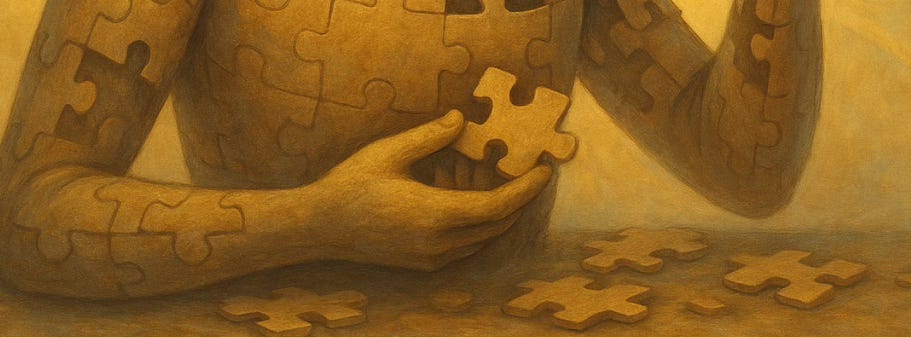
Having an Identity Crisis is Normal
Many survivors of cults experience identity confusion and disorientation after leaving. This is very common, and not a sign that you are “crazy” or “broken.” It really helps to listen to other cult survivor stories, so you understand it isn’t “you”, it was the systematic social influence situation you experienced.
You may feel like you no longer know who you are or feel empty. This questioning of “Who am I?” is perhaps the most common symptom post-cult. Feeling paralyzed when faced with even simple decisions is also common. Many people have told me that they think that since they “joined a cult”, they feel they cannot make good decisions.
If you feel this way, I encourage you to read more about the sophisticated methods that cults use to deceive and manipulate you to recruit and maintain their members. In my experience, nobody knowingly wants to be deceived, manipulated, and exploited by a destructive cult. They join what they believe to be something good for them.
Others experience grief for the identity they left behind. I remember feeling like I was now a college dropout and a former cult member, not a leader who was going to help “save the world!” I had many experiences with the Moon and top leaders, which were now disillusioning. When these experiences resurfaced, I realized that no matter how badly I felt, I would never go back. The totalistic belief bubble had been popped.
Most people are not former leaders, and they have a lot of indoctrinated programming that makes them continue to doubt themselves. You need to know that the cult identity is trained to have an “external” locus of control, to want someone to tell them what they now need to do. Exiting requires considerable strength and intellect. I remember that emotionally, I was a wreck when I first exited the cult. Unfortunately, if people don’t have a loving family or at least one good, supportive person, they can easily feel the need to return to the cult.
All of this is entirely normal. These experiences do not mean you are broken. You’re experiencing the natural aftermath of having your identity systematically disrupted.
Understanding “Floating”
Floating, an experience that confuses and frightens many former members, is when you suddenly get triggered by some cue or event, and your cult identity resumes control. This can be something you see, hear, smell, or feel, or a memory that surfaces.
Floating is especially common if your group used trance techniques such as chanting, hypnosis, meditation, speaking in tongues, or repetitive procedures.
Music is a particularly powerful trigger. Many groups deliberately use popular songs during indoctrination because music creates strong emotional anchors.
The key is to recognize floating as a conditioned response. When you notice it happening, name it! Remind yourself that “This is a temporary symptom of my conditioning, not the truth.”
It is also beneficial to identify the trigger and neutralize it. This is done by you learning to reprogram your own mind. When you recognize what causes specific responses, you begin to understand that they are not dangerous.
One example of this is the following story. Someone I know in a psychotherapy cult was encouraged to use her drawing skills while in hypnosis therapy. After she had left the cult, she tried to return to her drawing as a hobby, but found herself zoning out, wanting to self-hypnotize as she had been taught, and panicking every time she tried to draw.
With the help of a very informed therapist, she was able to identify her trigger. It wasn’t the act of drawing that was triggering her, surprisingly. It just so happened that every time she sat down to draw, she would whisper, “Okay, now concentrate.”
She realized that those words were very similar to the words her hypnotist would say to her at the beginning of a hypnotic induction. To retrain herself, she wrote down positive memories about “concentrating”, “concentrate”, and “concentration”.
The key here is to change the association of the trigger and train our brains to neutralize it.
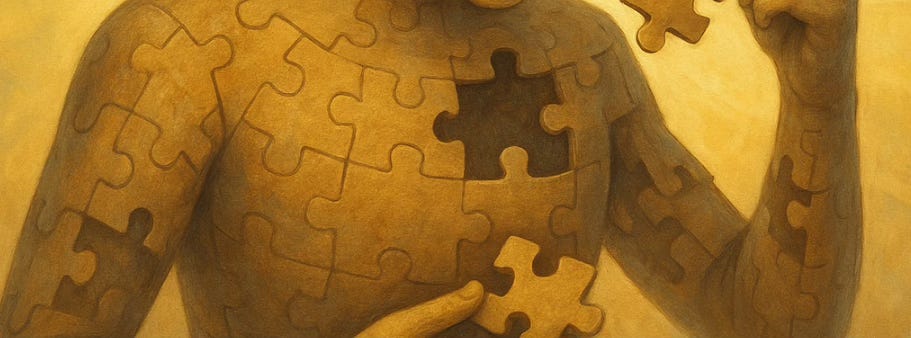
The Grief You Need Permission to Feel
Many people who exit cults will grieve their cult identity, and that’s okay. One thing ex-members need to know is that feelings are not bad. You can and will eventually feel anger. It is actually a good sign that you are taking back your power. You can feel betrayal. You can mourn your cult identity.
I tell my clients, “Think of feelings as your friends. You can listen to them, but you never want to be controlled by them. They may have valuable information that is difficult to let in. Be patient. Be your own best friend, and that means you are bigger than your transient feelings – and your thoughts.”
Even though the cult identity was constructed and imposed, even though it was based on manipulation and control, it still became part of your life. You built connections with people with that identity. I was the “spiritual parent” to the thirteen people I directly recruited into the Moonies. They related to me as their “spiritual father.” I had real feelings of wishing to love them, protect them, and help them grow closer to God. Once I woke up from the Moon cult trance, I wanted to help them get free! I went back to Queens College, where I recruited my three main “spiritual sons.” I gave a lecture on Lifton and the Moonies, and the three of them were no doubt told to attend and persuade me to rejoin. Moonies believed my deprogrammers had brainwashed me! The three of them sat together.
I gave real-life examples of how I deceived and manipulated them into the group. I shared the most powerful stories I thought might resonate with them. Afterward, I approached them and asked what they thought. I was crushed to hear Brian, my top disciple, say, “What about Father’s heart, Steve?” My heart sank.
I remembered I had been indoctrinated to indoctrinate my spiritual children to remain “faithful” even if I left, even though at the time, it was unimaginable that I would ever leave “the Family.” It was years of feeling guilty and wanting to help them get out. He has now reconnected with me on LinkedIn - although he has not and apparently does not wish to read any of my books. He left with a “sister,” got married, had a child, and they both left; he then went on to have a successful career. I still wish to hear from everyone else.
In the cult, I had a sense of purpose and certainty. Leaving meant rejoining the real world, and it sucked. Leaving meant losing all of that, and loss requires mourning.
You might even miss aspects of cult life. You might miss the feeling of being part of something you were told was special, of having all the answers, of the intense highs and sense of purpose. This doesn’t mean you made a mistake leaving. It means you’re human.
Allow yourself to acknowledge the loss while also recognizing what you’ve gained.
Grief is not linear. Some days you’ll feel strong and clear. Other days, you’ll wake up missing the certainty and simplicity of your old life. Both experiences are valid parts of the healing journey.
Born In vs. Recruited In
Your recovery journey depends significantly on whether you were born or raised in an authoritarian cult or recruited later in life. Both paths share similarities, but they present different challenges.
If You Were Recruited into a Cult
If you joined as an adult, you have a pre-cult identity to reconnect with. I was nineteen when three women recruited me into the Moonies. When I left, I had a foundational identity to reorient back to.
Your work involves excavating that earlier self. Who were you before? What did you care about? What made you laugh? What were your dreams?
These memories and experiences remain, waiting to be reclaimed. Looking at photos and videos, and spending time with friends and families as they recalled events and experiences. Visiting places. For me, it was about doing things I enjoyed again, such as playing basketball. I remember it took me a year before I could kiss a woman on the lips without hearing the Moonies Chapter Two lecture (about sexual sin) in my head. It took me a year to start writing poetry again.
If You Were Born or Raised in a Cult
If you were born into or raised in a destructive cult, your journey is far more difficult and complex for a wide range of possible reasons. Are your family and friends still members? Did you lose your employment? Your place to live? Because the cult identity was woven into your entire developmental process. As such, you face a few unique challenges.
Firstly, there is no pre-cult life to compare your life against. Though you may have witnessed how those outside your cult lived, those lifestyles were likely vilified.
Next, there is a potential for a lack of critical thinking skills in terms of reality testing and self-protection. This is especially true if you grew up within an authoritarian family unit. You may have educational gaps or limited exposure to healthy relational dynamics. This includes understanding healthy boundaries or how to assert yourself. I plan to cover more on critical thinking skills and healthy boundary setting in later pieces.
Despite all of this, you, too, still have an authentic self. Even children raised in the most controlled environments retain an inner core that the cult does not entirely erase.
I’ve worked with many people who were born into the most insular cults who describe not completely “buying in” to their beliefs. They had doubts and rebelled in small ways. They felt the disconnect between what they were told and what they sensed was true. Those moments of doubt and question, that was, and is, your authentic self.
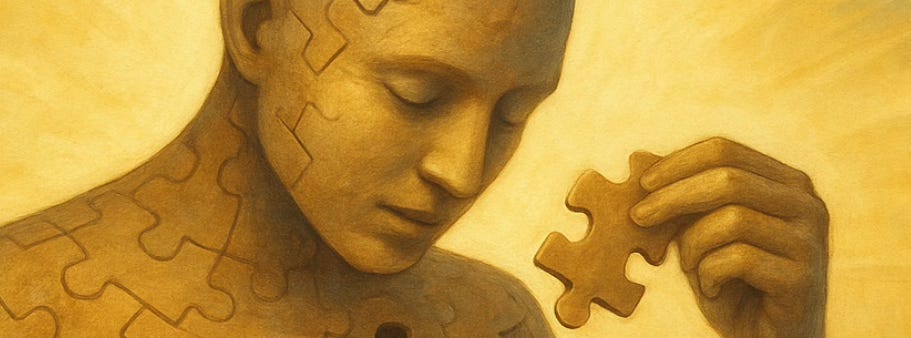
Practical Exercises for Discovering Your Authentic Self
The question “Who am I?” can feel overwhelming at first. However, there is no need to create a philosophical conundrum out of the question. It is best to start small.
The “Most You” Moments
Ask yourself the following question: When do I feel most like myself?
Take at least five whole minutes to sit deeply and ponder this question. Don’t rush to answer. Notice what comes up. Maybe it’s when you’re…
Walking in nature or on the beach
Creating something with your hands or doing art
Having deep conversations with certain people or debating
Listening to music or playing an instrument
Solving problems or figuring out systems
Caring for others or animals
These moments are clues to your authentic preferences and values. Follow them.
The Small Choice Challenge
Decision-making becomes extremely difficult under cult control. This is because the cult asks you to hand over all of your critical thinking skills. Like any skill, it requires practice to rebuild.
Start with small, low-stakes decisions.
What do I want to eat for dinner?
What route will you take on my walk?
What color shirt will I wear?
What song will I listen to?
The goal isn’t to make the “right” choice. There is no right choice. If you don’t like your choice, you can make a different one the next time. This is the flexibility of the small choice challenge — there are no significant consequences. The goal is to practice listening to your own preferences and acting on them. Notice what feels good. Notice what doesn’t resonate. Give yourself permission to change your mind.
In the beginning, you might feel paralyzed even ordering food at a restaurant. That’s okay. The paralysis will ease with practice. For some of my clients, I have to teach them strategies for decision-making —a topic for a future post.
Reclaiming Your Preferences
After you have made many small choices, you will begin to notice your preferences. Create a list of simple questions to explore:
What foods do I genuinely enjoy? (Not what I was told to eat, but what actually tastes good to me?)
What kind of music makes me feel alive?
What activities make me lose track of time?
What colors am I drawn to?
What temperature and weather am I most comfortable in?
Do I prefer mornings or evenings?
Do I feel more energized by socializing or by being alone?
Allow yourself to experiment. Try different things. Give yourself permission to discover that you actually don’t like something the cult promoted, or that you love something the cult forbade.
Who Do You Admire?
Think of people you admire (outside the cult). These people can be anyone whose qualities you respect. What do you admire about them?
Is it their…
Honesty and authenticity
Kindness and empathy
Intelligence and curiosity
Courage and resilience
Humor and joy
Commitment to justice?
The qualities you admire in others often reflect your own authentic values. These are signposts pointing toward who you want to become.
Moments of Rebellion
Recall times you doubted, questioned, or resisted. Maybe you…
Had questions you were too afraid to ask
Felt the teachings didn’t match reality
Wanted to do something different than what you were told
Felt drawn to people or ideas outside the group
Had a sense that something wasn’t right
Those moments of internal rebellion were when you were your authentic self, fighting for recognition and validation. Write them down. They show that you always had a core self that couldn’t be suppressed entirely.
Permission to Change Your Mind (Over and Over)
Here’s something that might surprise you. There is no single, static “you” to discover.
Many cults teach that there is one true calling, one right path, one correct version of yourself. This is a harmful lie that continues to constrain you even after you leave.
The truth is that you are a multifaceted person with the capacity to change and grow. Your identity is not fixed. You will evolve, explore, discover new interests, change your mind, try things, and decide they’re not for you, and that’s not only okay, it’s purely human.
Throughout this process, it is perfectly okay to be uncertain, make mistakes, and say “I don’t know.” You may grow in uncertain directions as you embrace autonomy. The cult wanted you to be constantly striving for perfection that isn’t real. Lifton called this “The Demand for Purity.” It is one of his Eight Criteria for evaluating brainwashing. Freedom means embracing the messy, beautiful process of ongoing self-discovery.
Think of yourself as a work in progress, not a finished product. You’re not trying to find the “right” you. You’re becoming yourself, one choice at a time.
Importantly, I recommend avoiding making any significant commitments for the first year after you exit. I recommend avoiding marriage, the military, or any other high-demand commitment. Your vulnerability at this moment makes you susceptible to manipulation, a phenomenon often referred to as “cult hopping.” As I mentioned before, take time to develop your critical thinking skills and reality-testing abilities before committing to new groups or relationships.
Spend time with people who encourage your questions, respect your boundaries, and support your autonomy. These are the relationships that will help your authentic self flourish.
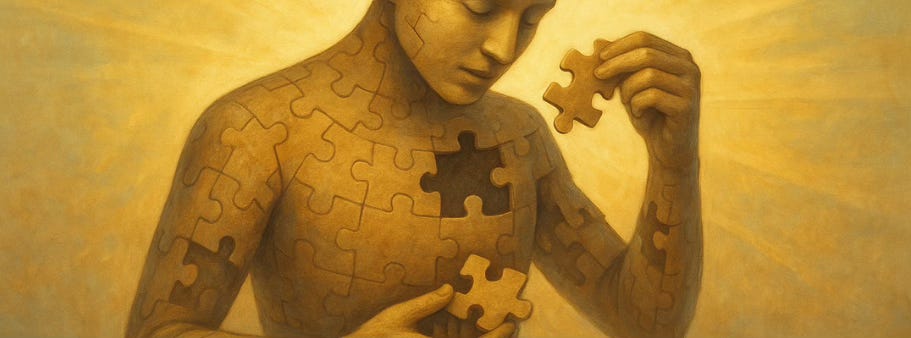
From Perfectionism to Growth
Many cults promote a culture of perfectionism. Everything must be done right, believed correctly, and performed flawlessly. Doubts, nuance, and ambiguity are often presented as unhealthy mindsets that will hold you back. This way of thinking can sabotage your recovery if you don’t actively counter it.
Instead, embrace a growth mindset. You are learning and discovering. You will make mistakes. You will try things that don’t work out. You will have days when you feel lost. This is all part of the process.
Most importantly, be patient and compassionate with yourself. Now is the time to practice radical self-acceptance as you discover who you are and who you aspire to become. Rebuilding your identity after involvement in a cult is challenging yet rewarding.
You don’t have to have all the answers. You don’t have to know precisely who you are or who you’ll become. You just have to keep showing up for yourself, one small choice at a time. Day by day, learn something new. Help someone. Stretch yourself. Develop a gratefulness practice. Being alive is an amazing gift.
You’ve already taken the hardest step. You left. Now comes the beautiful, messy, challenging, liberating work of discovering who you really are.
Welcome back to yourself.
As always, I’d love to hear your thoughts and experiences in the comments below. What has your journey of rebuilding your identity been like? What exercises or insights have helped you? Let’s support each other in this community.
Resources and Further Reading
The Freedom of Mind Approach to Recovery and Healing from Destructive Cults
Thank you for explaining how to effectively empathize with people going through major changes with their life ideology after being tricked. It’s so helpful to find ways to communicate that are constructive for recovery and healing. It reminds me of people that have been scammed financially. People in such situations deserve support and understanding to get through the stages of leaving and life restoration.
love that you're continuing posting about those of us still recoverung from cult identity. I asked a question about it on your last live stream and you answered.
still looking for more resources/therapy for recovery from an Evangelical cult.... thank you Steven Hasan