


When someone promises you financial freedom, it is worth asking how much freedom you have to question what they are selling.
Can you challenge their claims? Can you consult independent experts? Can you change your mind without being mocked, shamed, or told you are missing the opportunity of a lifetime? When celebrities like Tom Brady and Taylor Swift promote crypto - do people understand they are not experts on business and economics?
These questions were on my mind when I welcomed actor, author, and filmmaker Ben McKenzie to Cults, Culture, and Coercion. Many people know Ben from The O.C., Southland, and Gotham. I wanted to speak with him about his investigation into cryptocurrency—and the patterns of influence that make its promises so compelling.
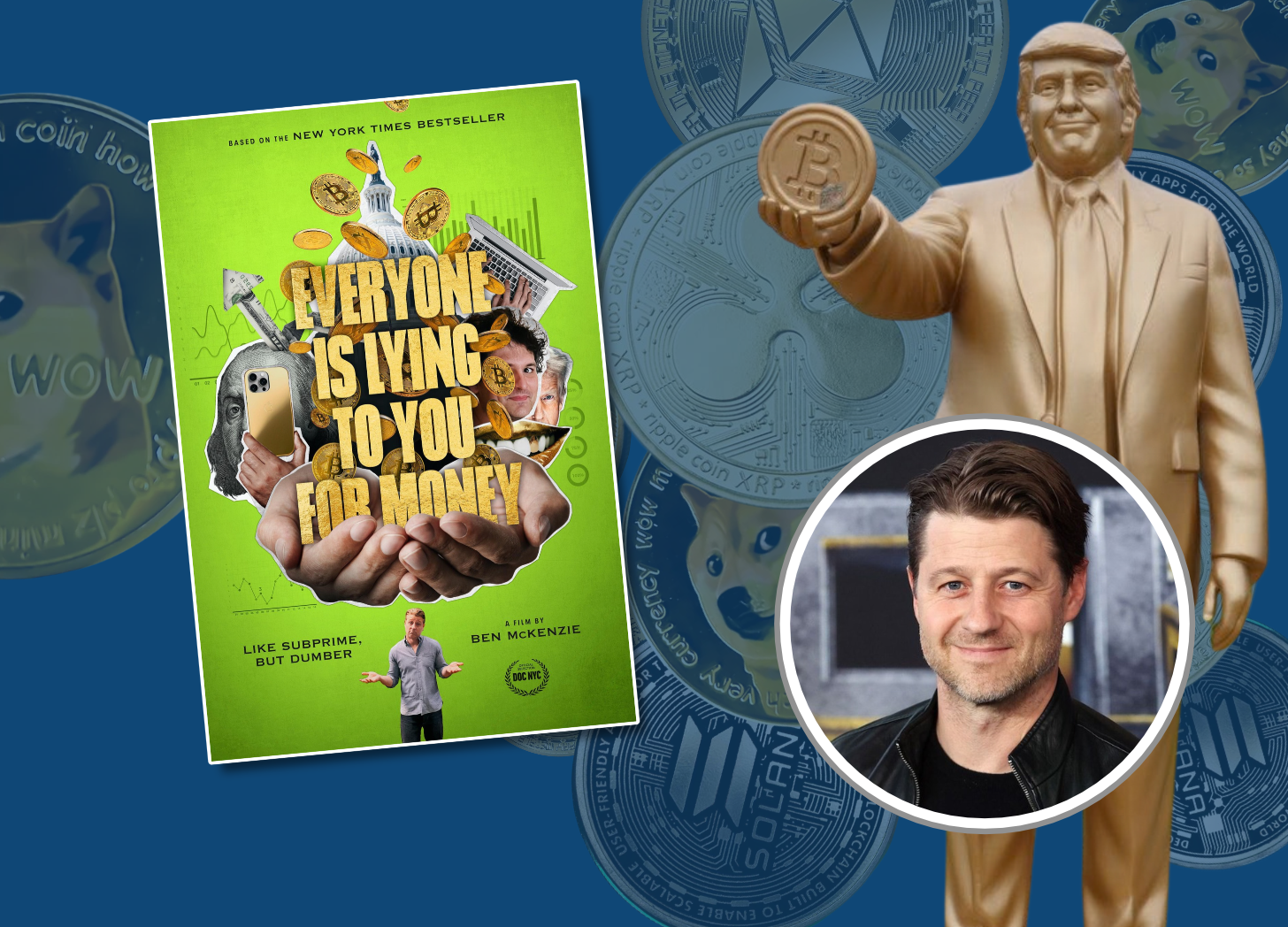
Ben wrote Easy Money: Cryptocurrency, Casino Capitalism, and the Golden Age of Fraud with journalist Jacob Silverman. His new, independent documentary, Everyone Is Lying to You for Money, brings that investigation to the screen. I watched the film and loved it. It is funny, disturbing, and accessible, even if you have never understood what cryptocurrency actually does.
Our conversation explored how financial promises can become bound up with identity—and how difficult it becomes to reconsider a belief when your money, community, and self-esteem are invested in it.
Ben’s investigation began during the pandemic, when acting work had slowed and a friend encouraged him to buy Bitcoin. This particular friend had previously steered him toward an investment in which they both lost money. Ben was skeptical.
He also had a degree in economics and an interest in how people actually make decisions. He began researching, connected with Silverman, and eventually brought a camera along as they researched their book. He later was asked to testify before Congress. Fortunately, the “Clarity Act” crypto bill was not passed in the Senate due to not including ethics requirements. This was a big blow to the crypto lobby which spent more than Big Oil in the 2024 election.
That willingness to investigate is central to what I appreciated about his approach. A familiar face selling something can create a feeling of trust. But familiarity tells us very little about whether a financial claim is sound. Ben used his access as an actor to ask questions.
I told him that my first reaction to crypto promotion was that it reminded me of a multilevel marketing (MLM) pitch: extraordinary wealth on display, extravagant promises, and the suggestion that you, too, could have that life if you joined.
I explored related concerns in my interview with William Keep, Selling Financial Freedom: William Keep on MLMs, Crypto, and the Politics of Deception. We discussed how recruitment-based opportunities can turn hopes for a better life into tools of undue influence, including schemes that combine crypto with recruitment compensation.
An investment can acquire a powerful social meaning. People may feel they are joining a movement, gaining access to special knowledge, or escaping a system that has failed them. Those hopes deserve to be understood. They also create opportunities for manipulation.
Buying cryptocurrency does not, by itself, mean someone belongs to a cult. The useful questions concern the surrounding behavior: How are people recruited? What information reaches them? How are doubts handled? Who benefits when they stay committed?
My BITE Model of Authoritarian Control® examines Behavior, Information, Thought, and Emotional control. In this conversation, information control was especially relevant. People need access to different perspectives and the freedom to evaluate evidence. When critics are dismissed automatically and every setback becomes a reason to believe more strongly, independent thinking suffers.
In my earlier Substack article, Crypto Cults Are Scamming The Life Savings You Worked Years For, I examined how financial hype, group loyalty, and the dismissal of doubt can reinforce one another. Ben’s reporting brings human faces to those concerns.
Fear of missing out (FOMO) can make this worse. So can shame. Once someone has encouraged friends or family to participate, admitting uncertainty may feel like admitting they have let everyone down. A financial commitment can become an emotional trap.
One of the most important parts of our interview concerned loneliness. Ben described speaking with people harmed by Celsius, the crypto company whose chief executive he interviewed for the film. He met men from different backgrounds and with different levels of financial knowledge. He saw how the promise of wealth could appeal to men who felt isolated or disconnected.
That observation matters. Someone may be seeking security, dignity, companionship, or a sense that their life is moving forward. A persuasive promoter can attach those needs to a product and make participation feel like the answer.
We will not help people by treating them as stupid for wanting a better life.
I know from my own experience with the Moonies how painful it is to realize you have been deceived. As I told Ben, hearing “I told you it was a cult” made me feel ashamed and embarrassed. It did not help me feel safe enough to talk.
If someone you love is beginning to question a financial scheme or an authoritarian movement, make room for that uncertainty. Listen. Reconnect through shared memories and ordinary interests. Ask what first attracted them and whether anything has troubled them since.
You can disagree with a belief while respecting the person who holds it. That relationship may help them feel able to consider information they previously rejected.
Ben’s film also tests grand claims against everyday experience. He described traveling to El Salvador and attempting to pay with cryptocurrency in a market in San Salvador. The vendors he approached would not accept it.
What struck me was the importance of going directly to the people supposedly benefiting from a promised transformation. Their experiences deserve more attention than a promoter’s presentation. When someone claims to be helping a community, we should listen to that community.
Our conversation also turned to democracy. Ben’s concern is that the promise of freedom from established institutions can lead people to place enormous trust in private actors with their own interests.
This connects with my interview with cryptocurrency researcher Molly White and the accompanying Substack post, Crypto Is Buying Your Democracy. Molly helped explain the relationship between crypto promotion, political spending, and consumer protection.
That is a question of accountability. Who has power? What must they disclose? What happens when they deceive people? How can those harmed seek redress?
Distrust of institutions can have legitimate causes. The challenge is to improve accountability while protecting ourselves from people who exploit that distrust for personal gain. We need to examine anyone asking for our confidence, including those who present themselves as rescuers.
Independent journalism and documentary filmmaking can help us do that. Ben spoke candidly about the difficulty of getting his film widely distributed and his concern for other independent filmmakers trying to reach audiences.
I connected this to information control. Information is the material we use to think. The range of voices we can encounter affects our ability to understand the world. Supporting independent work is one practical way to broaden that range.
Ben deliberately made a film that people could enjoy watching. Humor can help us approach a difficult subject, stay curious, and recognize contradictions we might otherwise miss. His encounters with crypto figures give viewers an opportunity to hear their claims and examine them.
I encourage you to watch Everyone Is Lying to You for Money. Visit the official film website for viewing options, or find the film on Amazon Prime Video. Ben explained that watching the film on its website directly supports the filmmakers. Viewing options and availability may vary by location. Read Easy Money if you want to explore his reporting with Jacob Silverman in greater depth.
Then have a conversation with someone about what you learned. Make it a conversation where questions are welcome, and nobody has to pretend to know everything.
We need communities where people can acknowledge mistakes without losing their dignity. We need trustworthy information and meaningful accountability. And we need the confidence to pause when someone tries to turn our hopes or fears into a sales opportunity.
Our freedom of mind depends on keeping that capacity to question alive.
Have you ever felt pressure to ignore your doubts about an investment, a leader, or a group? What helped you step back and think for yourself?
Links and further reading
Easy Money: Cryptocurrency, Casino Capitalism, and the Golden Age of Fraud
Everyone Is Lying to You for Money — Official film website and viewing options
Everyone Is Lying to You for Money — Amazon Prime Video
Selling Financial Freedom: William Keep on MLMs, Crypto, and the Politics of Deception
Crypto Cults Are Scamming The Life Savings You Worked Years For