



This week’s episode of Cult Conversations: The Influence Continuum, “Invisible Threads: Weaving Mental Health and Democracy in Trump Times,” features an interview with Pulitzer Prize-winning journalist Kate Woodsome, the founder of The Invisible Threads Project, which studies the relationship between mental health and democracy. She was part of The Washington Post team that won a Pulitzer Prize for Public Service in coverage of the January 6th Capitol attack. We spoke about how she was shouted at by the angry members of the insurrection mob simply for being a member of the press, the trauma she experienced, and her realization of the importance of keeping sane in a democracy. You can also listen to the podcast on Apple Podcasts, Spotify, or wherever you get your podcasts.
Next week’s episode, “Tools, Methods, and Political Games in the Age of Musk,” will feature an interview with Stuart Shulman, PhD, the founding Editor of the Journal of Information Technology & Politics. He holds a PhD in American Politics (Oregon 1999) and is currently the founder (2009) and CEO of Texifter, a software business serving academic, commercial, and government clients.
We are now offering extra blog posts exclusively to our paid subscribers. In this week’s post, “Taking Off the Rose-Colored Glasses Behavioral Signs of Undue Influence in Relationships,” we explore distinguishing healthy forms of influence from destructive ones, how “brainwashing” can be closer to home than you think, and how to recognize and address undue influence for a safer, healthier bond. Valentine’s Day may have passed, but I think this article will be helpful and informative. If you aren’t already a paid subscriber, now is an excellent time to become one!
This past weekend, the podcast Mission Implausible was published. The episode was called “The Cult of Trump with Steven Hassan.” I spoke with the hosts, former high-level CIA operatives John Sipher (who had “Q” clearance) and Jerry O’Shea. We discussed my experiences in the Moonies and how they relate to the current political climate, MAGA, and what it means for our democracy.
I recently did a short video review of the four-part cult docuseries, How I Left Opus Dei. I found profoundly it moving, bringing me to tears in every episode. The series powerfully portrays the experiences of women recruited into the Catholic authoritarian cult Opus Dei as minors. I wrote about Opus Dei in The Cult of Trump and its influence on SCOTUS and the Heritage Foundation’s Project 2025, which is now being implemented. Forty-two women are suing for being labor trafficked. The show features 13 former members. They were unduly influenced using manipulative techniques that can be measured in my BITE Model of Authoritarian ControlTM. They deceived even their own parents about their recruitment, which trapped them in a system that subjected them to years of exploitation. The psychological and physical toll of their ordeal was immense, yet their resilience shone through in the moments when they found the strength to break free. This docuseries is a must-watch for anyone seeking to understand the devastating impact of undue influence and the courage required to reclaim one’s freedom. The series is available on HBO Max and Hulu.
On March 6th and 7th, I will be speaking at Harvard Medical School’s conference, Psychedelic-Assisted Psychotherapy: Navigating Complexity in Community. I’ll share insights on my models, the Influence Continuum© and BITE Model of Authoritarian Control. I’ll emphasize the need for therapists to conduct thorough family-of-origin histories, as past authoritarian or abusive environments should be addressed before considering psychedelics. I’ll also discuss MDMA and Ketamine—often used in this field despite not being psychedelics—and stress the importance of firm therapy boundaries to protect vulnerable clients from undue influence and ethical violations. I look forward to learning more from this evolving field.
I’m sure many of you have heard about Reverend Al Sharpton’s call to boycott companies eliminating Diversity, Equity, and Inclusion (DEI) programs, including an “economic blackout” day refraining from all non-essential purchases on the 28th of this month. I fully support the National Action Network’s intentions. As someone who has spent decades studying authoritarian influence and systemic control, I know that dismantling DEI is a tactic used by those who wish to uphold power structures that marginalize and oppress. I encourage everyone to take action, stay informed, and stand up for a more just and equitable society.
This week’s livestream will be tomorrow, Feb. 19th, from 1 to 2 p.m. EST; I welcome everyone to tune in with questions and comments! Last week’s livestream was a great success; you can see the replay here if you missed it.
And have you filled out our bitemodel.com survey yet? Please consider doing so for healthy relationships and groups, too! Please give the name of the healthy group. You can make multiple entries if you have been involved in more than one group. Please feel free to share it on Reddit, Facebook, and anywhere ex-members can be found. We wish to collect a database, especially of authoritarian groups.
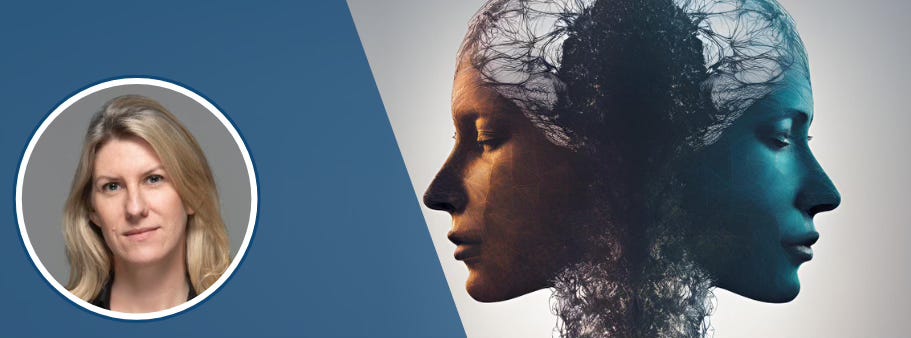

For those on the ground that day defending the Capitol, working inside the building, or covering the events for news outlets, post-traumatic stress is undeniable. Kate Woodsome, at the time a journalist for The Washington Post, was there during the attack. She recalled being handed a bulletproof vest, helmet, and mask, preparing for what would soon become an intensely hostile environment. Confronted by an angry mob, she was blamed simply for being part of the press. During our conversation, she described how she managed to de-escalate the situation with a quick, calculated response. Yet, the impact of the day left deep scars. “I experienced a very significant trauma from that interaction, from the entire day, and from the response to the trauma afterwards, institutionally,” she said.
Read the blog post or listen to the podcast below:


Have you ever wondered if your partner, friend, or family member is subtly (or even overtly) steering your choices without you fully realizing it? The days following Valentine’s Day often bring a mix of stories and, regrettably, warning signs that not every romance is healthy. While we celebrate healthy expressions of love and commitment, it’s also an opportune moment to talk about a destructive dynamic that can creep into relationships: undue influence.


How can you tell if that group your family member has joined is safe? Is your relationship hitting a “rough patch,” or is there actual cause for concern? With this anonymous, easy-to-use diagnostic tool, you can answer simple questions and determine if any group or relationship is beneficial or destructive, ethical or unethical, healthy or unhealthy. And now, you can share your results on your social media if you wish!
As always, please let us know what you think about these pieces or what you’d like to see us discuss in the future. Thanks so much!
