


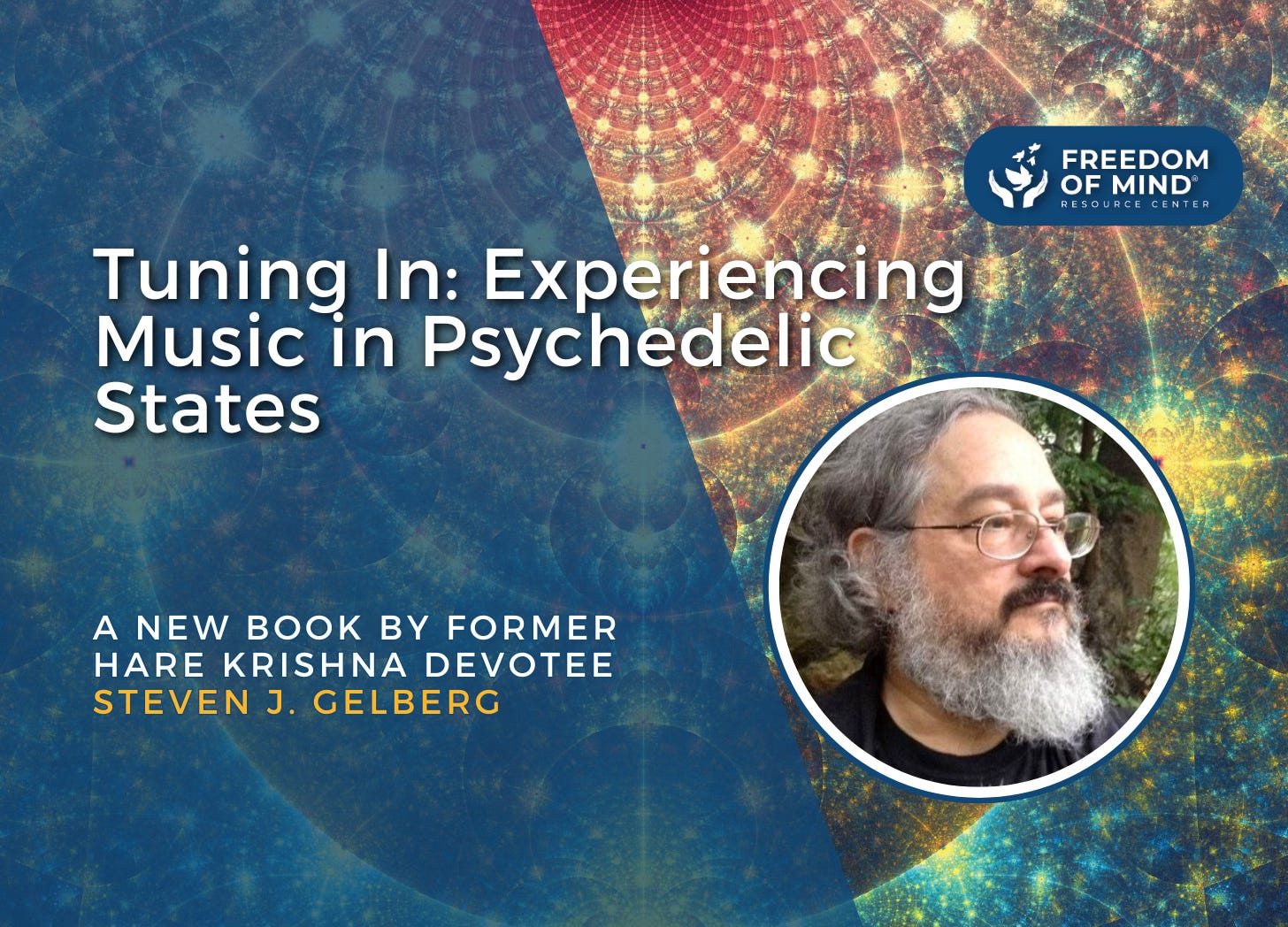
Liberation (moksha) is the state in Hindu philosophy by which the practitioner becomes self-actualized and freed from the cycle of birth and death in the material world. During the 1960s, this core idea and a mission to spread the teachings to the West became the foundation of various Hindu cults, including Hare Krishna (a/k/a ISKCON). These teachings led many to lose themselves in various forms of Hindu mysticism and to membership in organizations characterized by authoritarian and often corrupt organizational structures. Steven J. Gelberg entered the cult in 1970 at the age of 18 and exited in 1987 at 35 years old. While in the organization he authored the 1983 Grove Press book Hare Krishna, Hare Krishna: Five Distinguished Scholars on the Krishna Movement in the West.
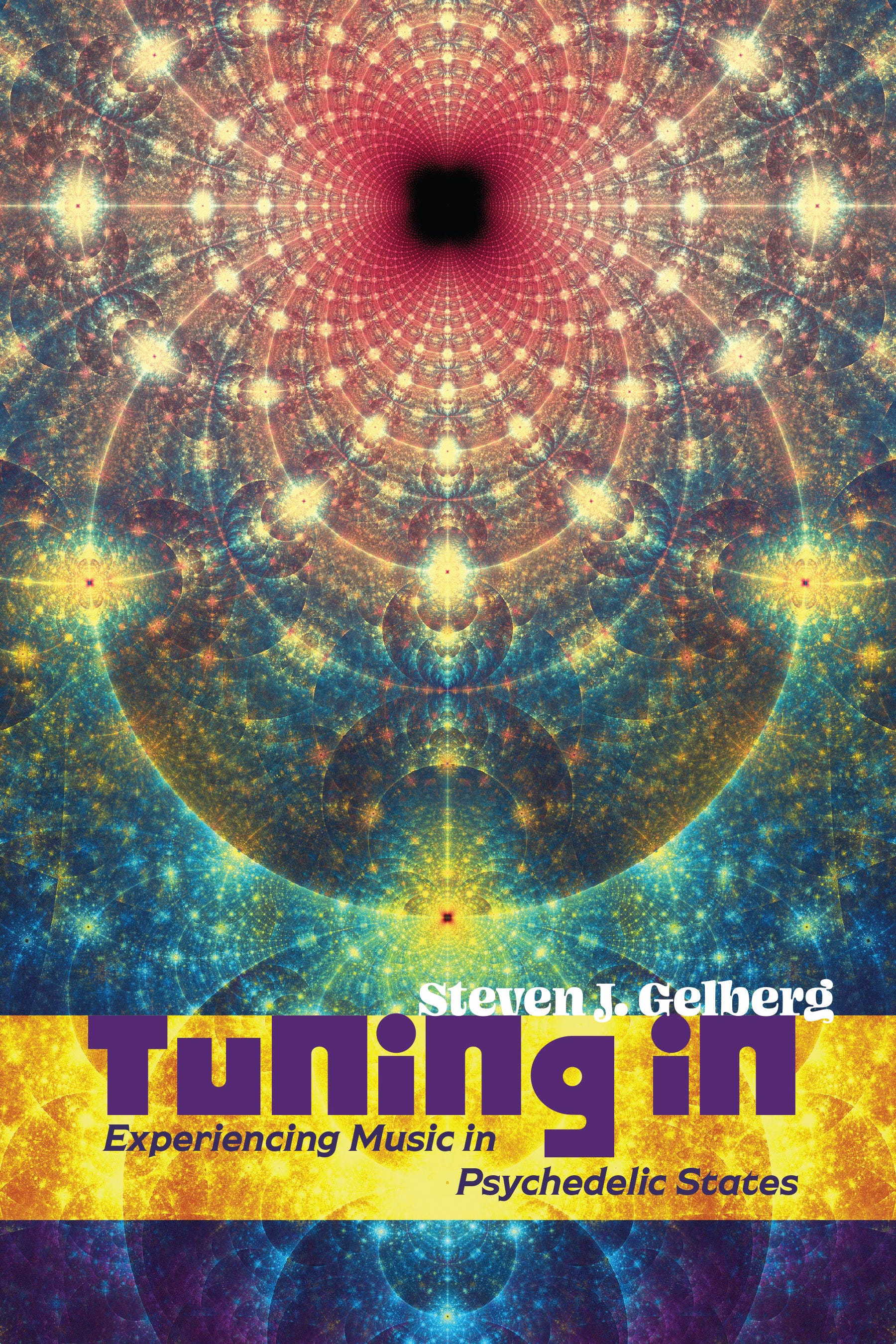
On leaving the organization, Steven explored spirituality and the academic study of religion more personally and entered Harvard Divinity School, receiving his Master of Theological Studies degree in 1990. Later, he wrote India in a Mind’s Eye: Travels and Ruminations of an Ambivalent Pilgrim, published in 2012 (link at end). More recently, he’s written a new book, Tuning In: Experiencing Music in Psychedelic States, where he explores the role of music in psychedelic-assisted psychotherapy and psychedelic use generally. The book, set to be released this year, offers firsthand testimony of music and its effects through “trip reports” and relevant insights from psychologists, musicologists, religion scholars, scientists, and others.
In-Depth Firsthand Insight into the Hare Krishna ISKCON Cult
Hare Krishna was built around serving the Hindu deity Krishna. ISKCON's founder, A.C. Bhaktivedanta Swami Prabhupada, brought the religion from India to the United States in the mid-1960s, with the opening of the official organization in 1966. This period was a time of flourishing in the psychedelic movement, which included the influence of spiritual-minded musicians like George Harrison, whose hit song My Sweet Lord (in which he sings the famous Hare Krishna mantra), helped spread the Krishna message. ISKCON centers became known for offering free vegetarian food and proclaiming that chanting the Krishna mantra would help one “stay high forever,” a message appealing to those involved in psychedelic mysticism.
LSD was being used by many young people at that time, which often left them open to seeking more ineffable doors to explore. “You had people who were very prominent in the counterculture pointing east and saying, there is wisdom there. There is profundity there. So, many of us young psychedelic explorers ended up reading the Bhagavad Gita or Buddhist texts. There were vast numbers of young people exploring in that area, and it so happened that the Krishnas made themselves very visible,” he said. Steven himself joined the organization at its height, hoping for transcendent experiences and spiritual transformation.
The Corporatization and Authoritarian Influence of Hare Krishna
Steven noted that “the golden age” of the Krishnas lasted from the late 1960s to the mid-1970s. However, the anti-cult movement started around 1978 in the wake of the Jonestown mass murder-suicide. After the founder of ISKCON, Swami Bhaktivedanta, passed in 1977, cracks began to appear within the organization and widescale disillusionment followed. “To summarize very briefly, like a lot of world-saving cults, the mentality of the-ends-justifies-the-means came into prominence, and people who otherwise might have been instinctually ethical-minded were sold on the idea that it’s so important we spread the word, this teaching, that it's ok to kind of fudge about the truth,” Steven noted. Fundraising became the overarching theme, and lies were told about what the money would go towards. Additionally, child abuse became a serious problem in the organization’s schools. Overall, through the years, the atmosphere in the organization changed from one of spiritual idealism and collective enthusiasm to tension and crisis and, for many, especially women, an oppressive cultic environment.
Tulsi Gabbard’s Connection to Krishna Hinduism
We discussed the more recent finding that Tulsi Gabbard, nominated by Trump to be Director of National Intelligence, maintains ties to Krishna Hinduism and ISKCON. Chris Butler, who is the guru of Tulsi Gabbard, was a disciple of the Krishna movement and Prabhupada, but left the group and started his own cult. The group is known for its homophobia. “The Krishna movement is very misogynistic. They try to hide that. They don’t like talking about it. They know it’s not popular, but if you go to Prabhupada’s books, he repeats what he learned from the Hindu tradition about women being lesser and needing to be always under the control of a man and are less spiritually adept than men are,” Steven explained. He expressed concerns that Gabbard’s ties with these organizations are likely to have shaped some of her own ideas along these lines, ones she’s not likely to discuss publicly.
Changing Views of Psychedelics, Music, and Clinical Studies
Steven and I discussed his life after the ISKCON cult and how a connection to his family gave him an “exit ramp,” as I named it. With this, he could go back to school and create a new life. In addition to his spiritual and academic education, he continued to tune into an evolving “Psychedelic Renaissance” as the government began to loosen regulations allowing for legitimate clinical studies and inspiring the creation, by growing numbers of colleges and universities, of programs and centers for the study of psychedelics and their therapeutic effects.
In his new book, Steven discusses his exploration and experimentation with psychedelics. “I found the experiences very philosophically and spiritually inspiring and quite mind-blowing,” he explained. However, at some point, he realized that music, though often an integral aspect of the psychedelic experience, had received minimal attention in writings about psychedelics and psychedelic therapies. This inspired him to attempt to fill that lacuna. After years of wide-ranging research and reflection, he wrote Tuning In: Experiencing Music in Psychedelic States.
Life After Cult and Providing Exit Ramps
As we were wrapping up, we discussed the importance of individuals who have been in cults sharing their stories and experiences so that others who may be exiting cults understand that there is ‘life after cult,’ and this can be a very successful life. I reminded viewers that as people who are in modern cults, like passionately committed followers of Trump, begin to see that he is not the great leader he claims to be, or the God-sent savior of America his extreme Evangelical followers proclaim, and that his promise to help the working class is a boast rather than an actionable plan, many of his followers are likely to become disillusioned and will need guidance and support in leaving the Trump cult. Steven agreed and reminded listeners, “There are others who've been through the same path and are there to catch you as you fall.” I agree and noted that helping people feel less alone on that path would be a critical aspect of that conversation.
Resources:
Information about the documentary, Monkey on a Stick
Oh, The Things I Learned! Lessons from Seventeen Years in the Hare Krishnas
India in a Mind's Eye by Steven J. Gelberg | Blurb Books
Tuning In: Experiencing Music in Psychedelic States | State University of New York Press To be published April 1 by SUNY (State University of New York) Press. Available for pre-order on Amazon.
Steven J. Gelberg Fine Art Photography
My Battle with Tulsi Gabbard’s Cult Followers in Hawaii by Christine Gralow
Part 2: My Battle with Tulsi Gabbard’s Cult Followers in Hawaii by Christine Gralow