



Why is it just so hard to just say no?
You already know something is wrong. In the past, maybe you’ve said yes when you wanted to say no, handed over things you couldn’t afford to lose, your time, money, peace of mind.
You then spent hours afterward trying to convince yourself it was the right call.
Maybe this is happening to someone you love. You’ve watched them shrink, defer, and apologize simply for existing.
In many cases, it is a trained response. Spending time in these coercive environments, where a leader’s approval determines your sense of safety, creates guilt about saying “no.” Frankly, these immediate responses are installed.

Understanding how that happens is what I want to explore with you today. In my new post for paid subscribers, Why Survivors of Cults Can’t Stop Saying Yes, I explore how family, relationship, or cult conditioning keeps people agreeing long after they leave. In it, I discuss:
How authoritarian systems foster obedience
The problem of developmental people pleasing
Why kindness isn’t compliance (and compliance isn’t kindness)
Why the survival mechanism of people pleasing outlasts the danger that created it
What happens when your locus of control is external
The value of assertiveness and self-honesty
Practical steps toward healthy boundaries
If you aren’t already a paid subscriber, please consider becoming one. Paid subscribers help support my work and also get full access to our full archive of resources, which include comprehensive guides like this week’s post, expert interviews, and informative articles, such as:
Rebuilding Your Identity Post-Cult — Addresses the identity confusion that underlies people-pleasing behavior, including the challenge of discovering your own needs and preferences after years of having them suppressed.
When One Person Becomes A Cult — An exploration of how the same dynamics of control and compliance that operate in large cults function identically in one-on-one relationships, where people-pleasing often becomes the primary survival strategy.
What To Do When You Don’t Feel You Can Trust Yourself Anymore — A step-by-step guide for rebuilding confidence in your own judgment after leaving a destructive group or relationship, directly relevant to the decision-making paralysis that accompanies chronic people-pleasing.
This week’s regular livestream resumes on Wednesday, March 11th, at 2 pm EDT, and we will have a special livestream with Craig Unger, author of American Kopromat- all about Russia and Trump, on Friday, March 13th, at 2 pm EDT - who I’ve had on my podcast before.
You can see last week’s livestream with former Jehovah’s Witness elder, Isaac Carmignani here on why a doomsday cult wants members to change their wills and give their property to the Watchtower.
Prophets or Profits?

Another reason people put up with bad behavior, particularly from their religious leaders, is that the environment of their worship has been carefully crafted to foster a sense of normalcy and consistency, even (and especially) when the messaging has become abusive.
In this week’s episode of my Cults, Culture & Coercion podcast, Bethel Church and the New Apostolic Reformation: A Christian Scholarship Perspective: Holly Pivec and Doug Geivett on Two Decades of Tracking the NAR’s Apostles and Prophets, I talk with scholars Holly Pivec, MA, and Doug Geivett, PhD, who are Christian scholars sounding the alarm from within the faith, grounded in biblical scholarship and philosophy.
We discuss how large-scale networks of churches, such as the New Apostolic Reformation and The Bethel Church, are espousing teachings that contradict Biblical Christianity, particularly “declarative prayer” which resonates with the “prosperity gospel,” which teaches that people will get rich if they pray and donate money to their church.
Listen on Apple | Spotify | Watch on YouTube
Read my Substack post about the interview:
New Apostolic Reformation: A Christian Scholarship Perspective
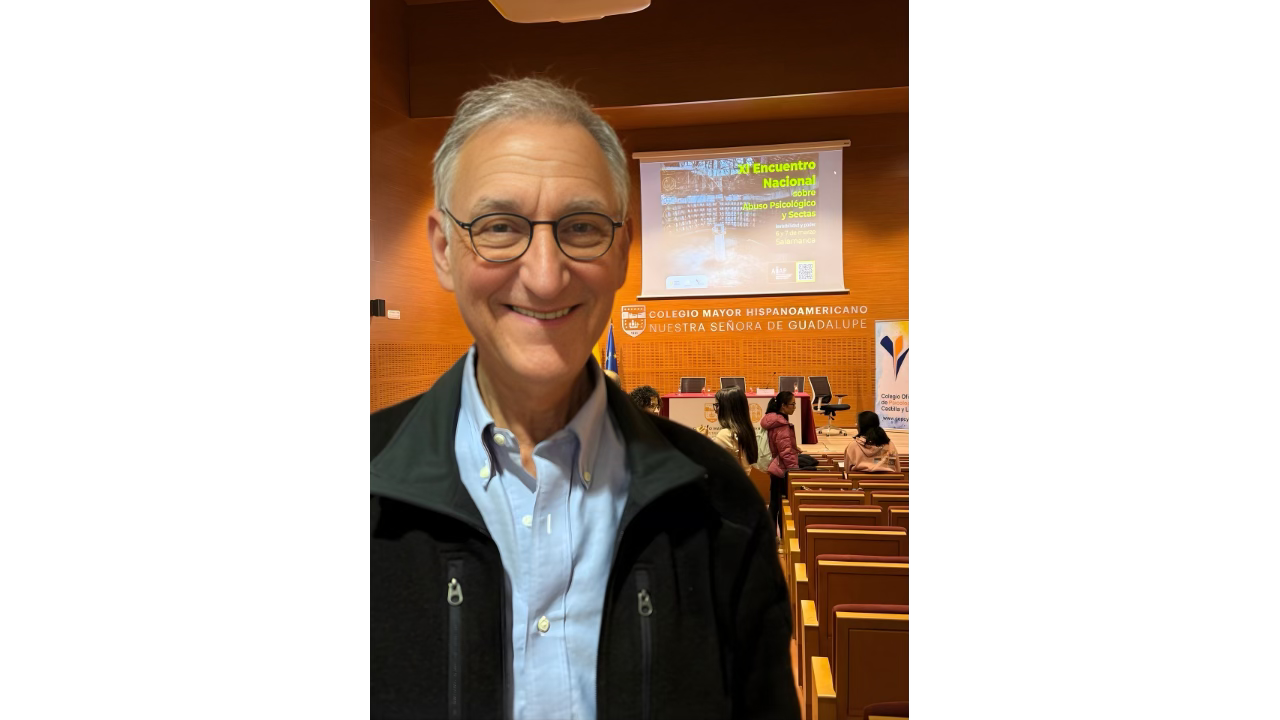
This past weekend, I attended the 11th annual National Meeting for Professionals, Family Members, and Former Members of Sects, sponsored by the Ibero-American Association for Research on Psychological Abuse (Encuentro Nacional sobre Sectas) in Salamanca, Spain. This annual meeting is open to psychology professionals, related experts, family members, former cult members, students, and the general public, all of whom are there to share their knowledge and experiences. I really enjoyed networking with the ex-members, journalists, and psychologists. With the help of an AI translation app, I was able to understand most of what was discussed.
Mormonism and the BITE Model©
I was pleased to see an op-ed by Keith Burns in the Salt Lake City Weekly, Is it fair to use the word “cult” for the Church of Jesus Christ of Latter-day Saints?, using my BITE Model of Authoritarian Control™ as a lens to address this question.
Remember, you can do your own analysis of any group or relationship with my BITE Model Survey! The survey is free and anonymous, and every response helps us quantify experiences of manipulative control, creating valuable research material for future scientific publication.

As always, please let us know what you think about these pieces or what you’d like to see us discuss in the future. Thanks so much!

This concept, like the 1990s “inner child” self-help movements, can be taken in the wrong way by people who really need to learn graciousness and generosity. I saw this first hand. I tend to believe that the narcissistic tendencies of many today are rooted in “being good to yourself.” This message has been dangerously distorted. I fully agree that many need to learn self nurturing. I am again hearing messages that loudly echo 1990s and before pop psychology.
Thank you!!